Malware Analyzer 360 Malware Analyzer 360

Advanced Attacks
Require Advanced Analysis

Signature-based tools can only stop what has already been named. The Malware Analyzer 360 goes past that: a hardened sandbox and analysis engine built to expose unknown, targeted and APT-grade attacks by what they do, not by what they are called.

Dynamic behavioural analysis, static code inspection, real-time URL verdicts and Content Disarm & Reconstruction – one engine, one report, one verdict.

99.7%

Detection rate across known and previously unseen samples

~2 min

Full triage report for an APT sample, static and dynamic

Parallel

Concurrent file analysis that holds up under high volume

ATT&CK

Every verdict mapped to MITRE tactics, techniques and procedures

Four analysis layers, one verdict

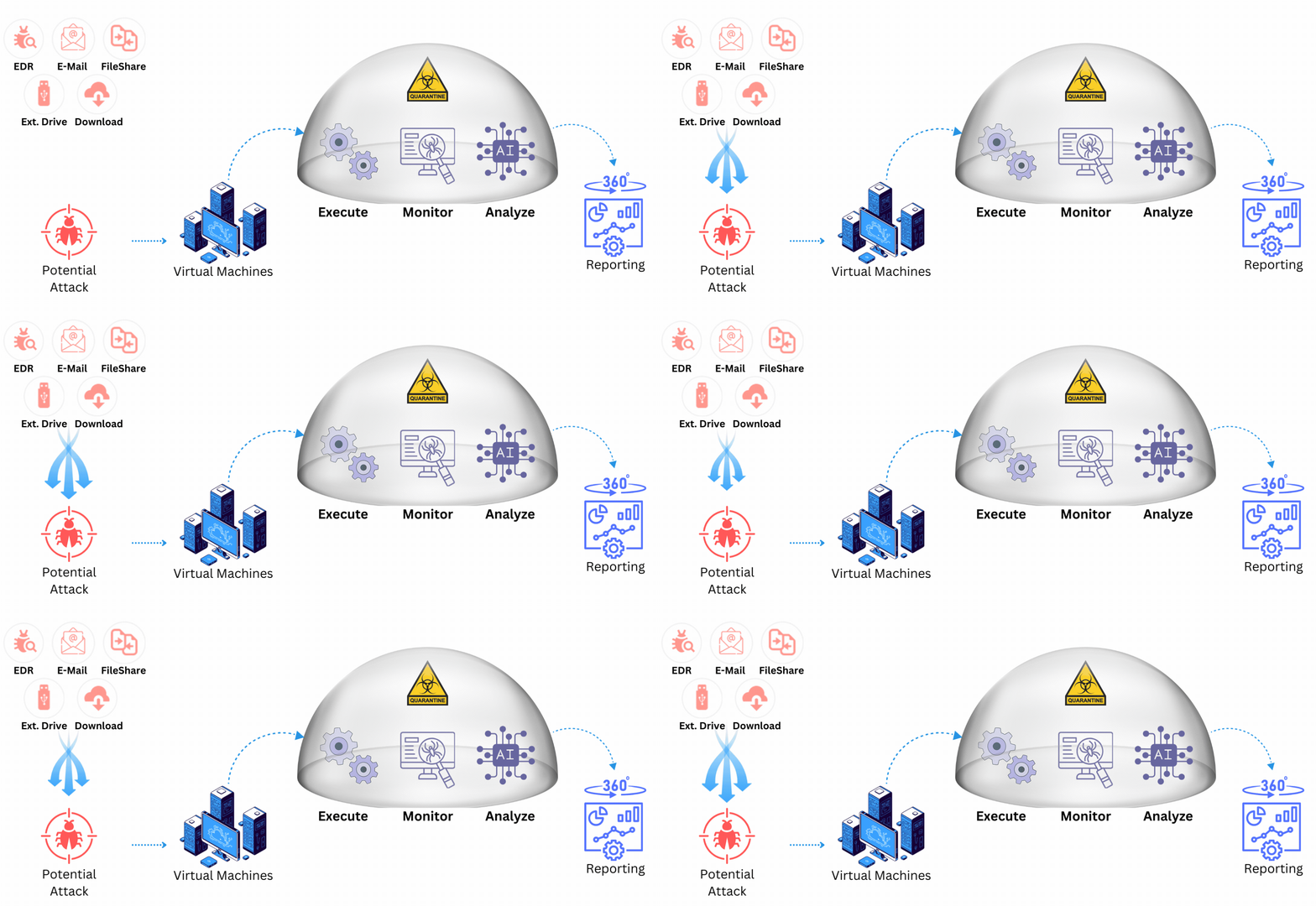
A file or link entering the analyzer is examined from every angle at once. Behaviour is watched in isolation, code is read without ever running it, destinations are resolved live, and anything reaching a user can be rebuilt clean before it arrives.


Dynamic Analysis
Isolated sandbox detonation
Sandbox

The sample is executed inside a hardened, isolated environment where every system call, registry change, memory movement, network connection and spawned process is recorded in real time.

Evasion doesn't help

Malware that hides its payload, sleeps, or checks for a virtual machine still has to act eventually – and when it does, the behavioural trace gives it away.

Static Analysis
Code-level inspection
Static analysis

The file is read without being run: signature extraction, suspicious API and function calls, packing and obfuscation techniques, embedded resources and known malicious code patterns.

Better together

Paired with dynamic detonation, static findings close the gap that either method leaves on its own – strong coverage of both known families and zero-day samples.

URL Analysis
Verdicts before the click lands
URL analysis

Links are resolved and evaluated live – phishing and credential-harvesting pages, command & control endpoints, and drive-by download chains are identified before a user ever interacts with them.

Follows the redirect

A clean-looking shortener that ends at a malicious landing page is judged on where it actually goes, not on how it looks in the message.

Content Disarm & Reconstruction
Threats removed, not just flagged
CDR

CDR strips active content – macros, embedded scripts, malformed structures – and rebuilds the document as a clean, usable file. The threat is neutralised before it even reaches the analysis queue.

Where it matters most

Critical for email attachments and file-sharing workflows, where users need the document now and cannot wait for a full verdict.

AI-Powered Classification
Understanding, not just detection
AI classification

Working with CyberFortress AI, the engine interprets malicious behaviour in milliseconds – assigning family and intent rather than a bare verdict.

Built for variants

New variants, polymorphic samples and multi-stage attack chains are caught with far higher accuracy than pattern matching allows.

IOC & MITRE ATT&CK Mapping
Reports an analyst can act on
Reporting

Every analysis produces extracted indicators of compromise – hashes, domains, IPs, mutexes, dropped paths – ready to push straight into your SIEM, EDR or firewall.

Tactics, techniques, procedures

Findings are mapped automatically onto the MITRE ATT&CK framework, so the report shows not only what happened but how the adversary operates.

Inside the report

Select a view to see what an analyst gets back from a single submission.

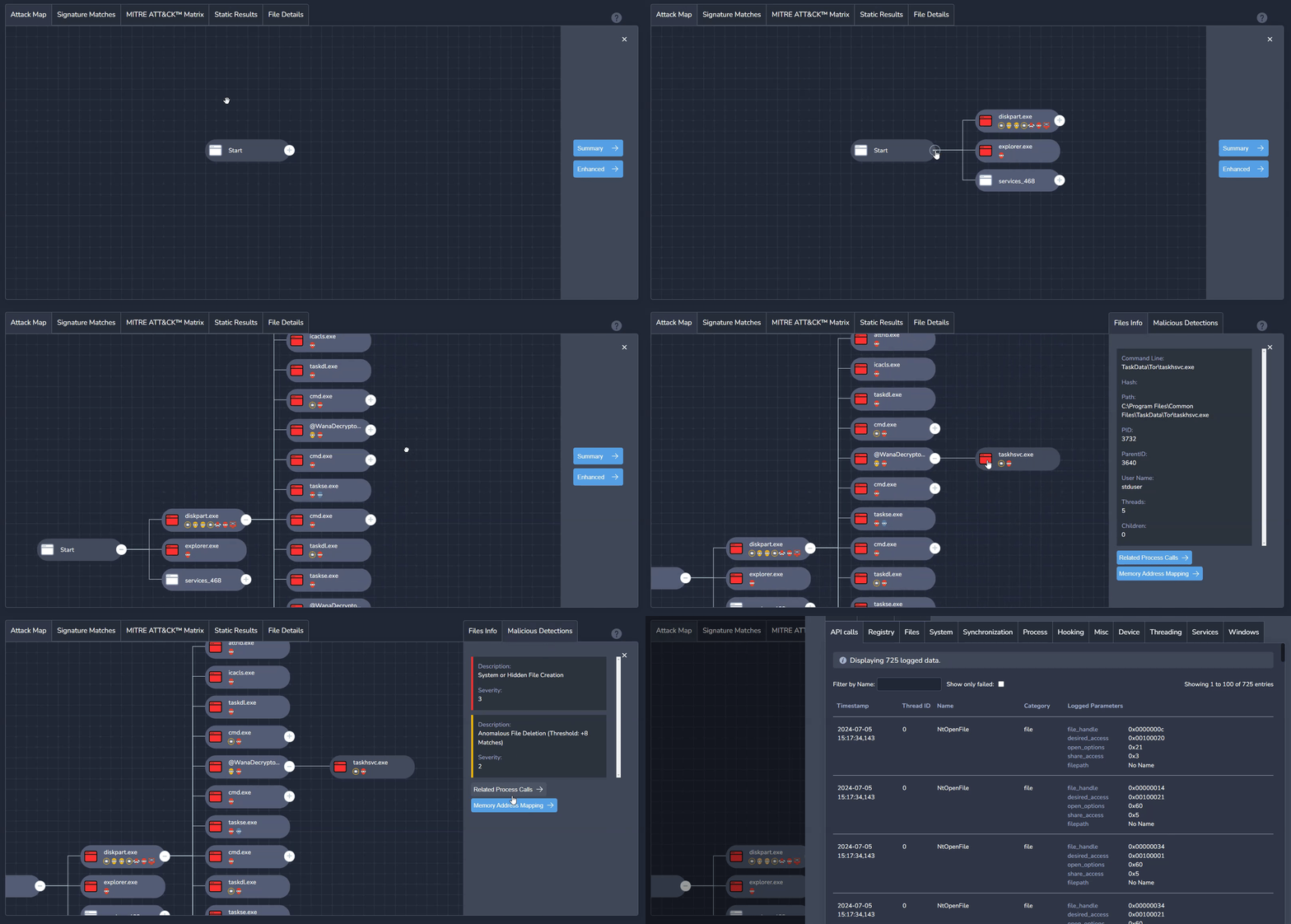
Attack Map

The full execution chain, branch by branch – every process, file and system change the sample produced.

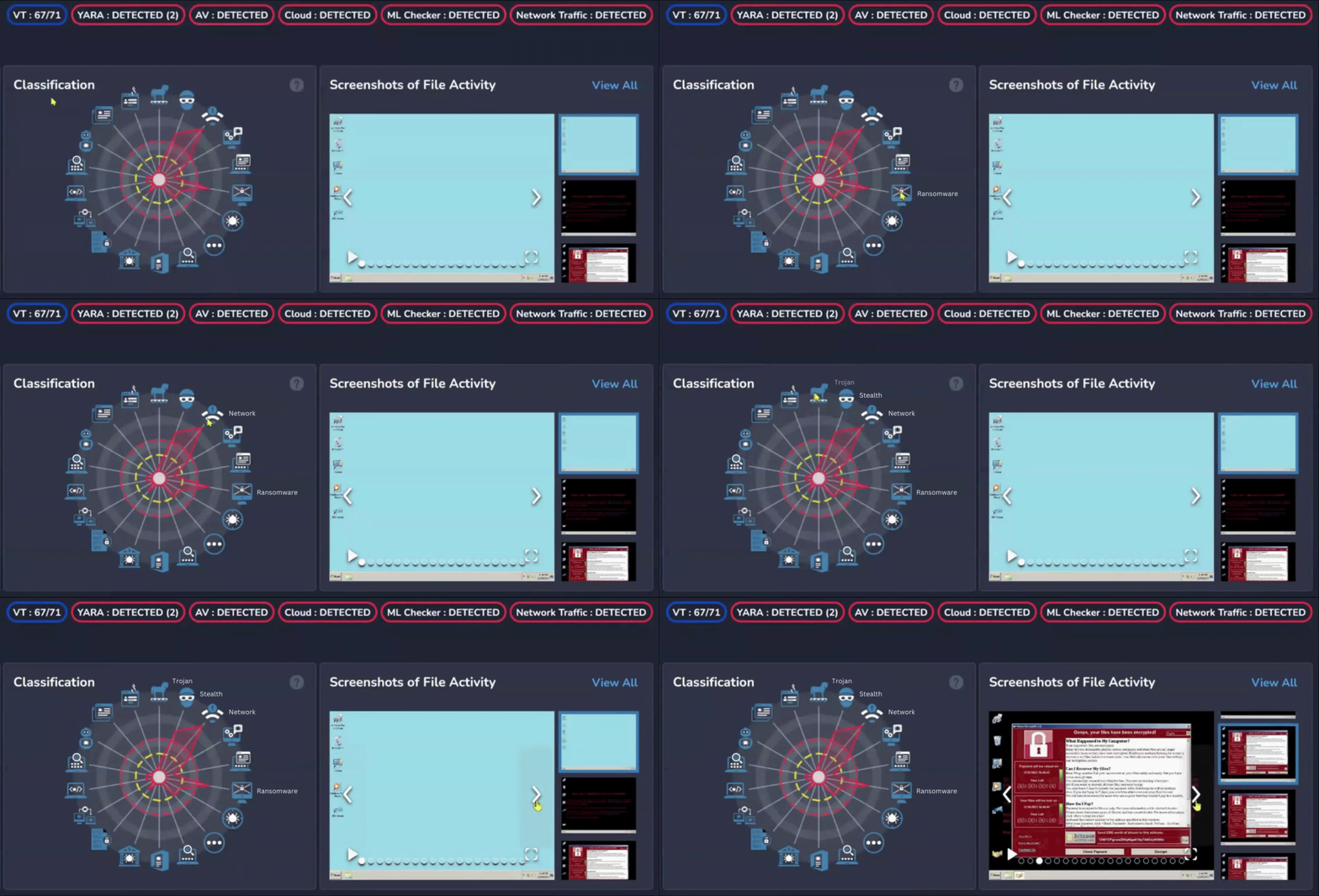
Classification

CyberFortress AI scores the sample against malicious behaviour categories on a probabilistic radar chart.

Network Traffic

Outbound connections and contacted domains, exposing the C2 infrastructure behind the attack.

Attack map view

Where teams put it to work

The analyzer runs as a service behind the rest of the platform – and answers directly to your own tooling through the API.

Email attachments

Every attachment arriving through Mail Gateway is detonated and, where policy requires it, rebuilt clean with CDR before delivery.

User-uploaded files

Portals, ticketing systems, SharePoint, OneDrive and file shares can submit uploads for a verdict before the file is ever stored or opened.

Suspicious URLs

Analysts and automated playbooks resolve a link's real destination and intent without exposing a single production machine to it.

APT hunting on endpoints

Suspicious artefacts collected by Threat Hunter are sent back to the analyzer, turning a quiet anomaly into a named, mapped intrusion.

Send us the sample that got through

Try the analyzer on your own files and links, or run a 30-day proof of concept inside your environment.

Datasheet also available in Türkçe.