Security That
Learns From Every Event
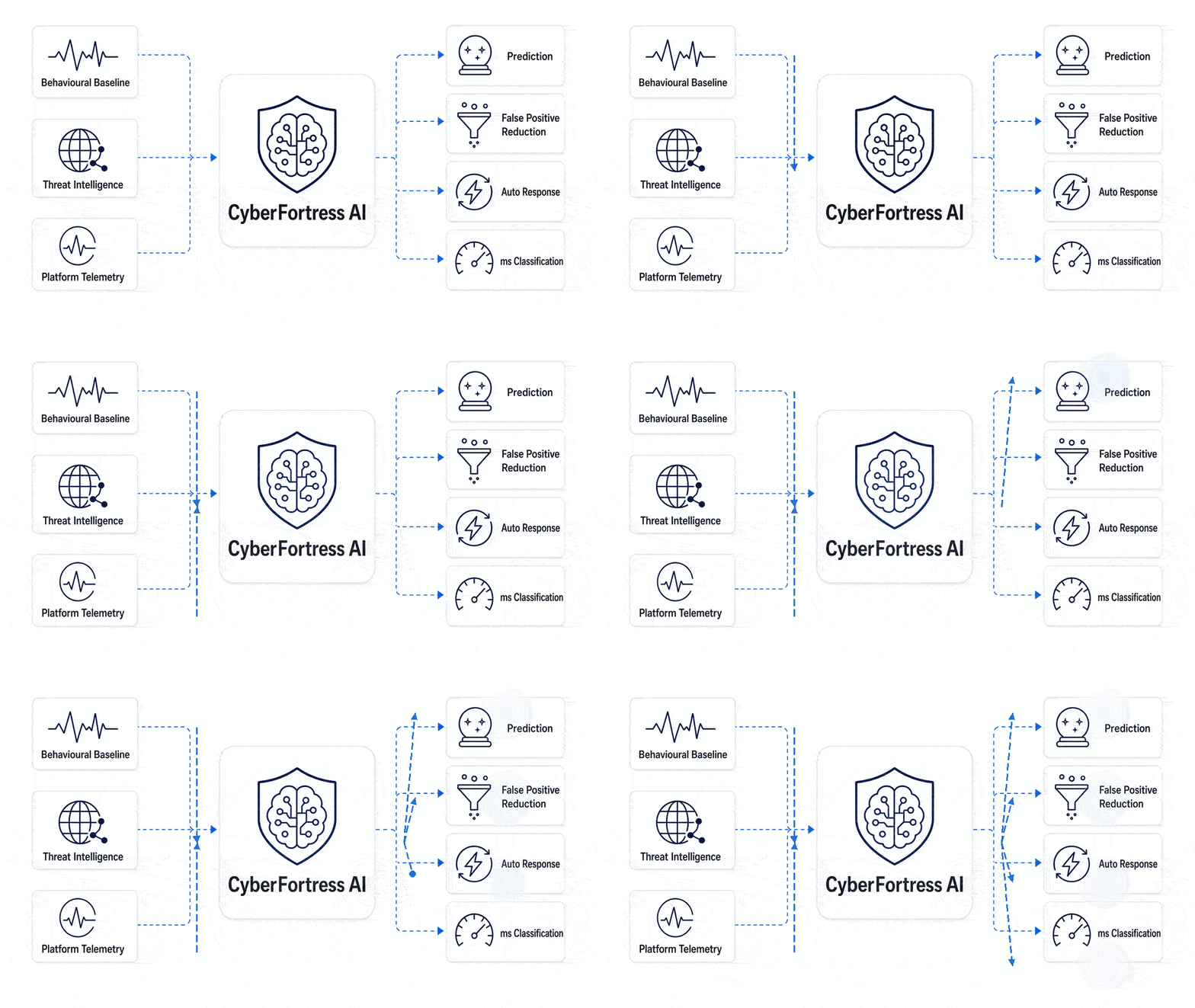
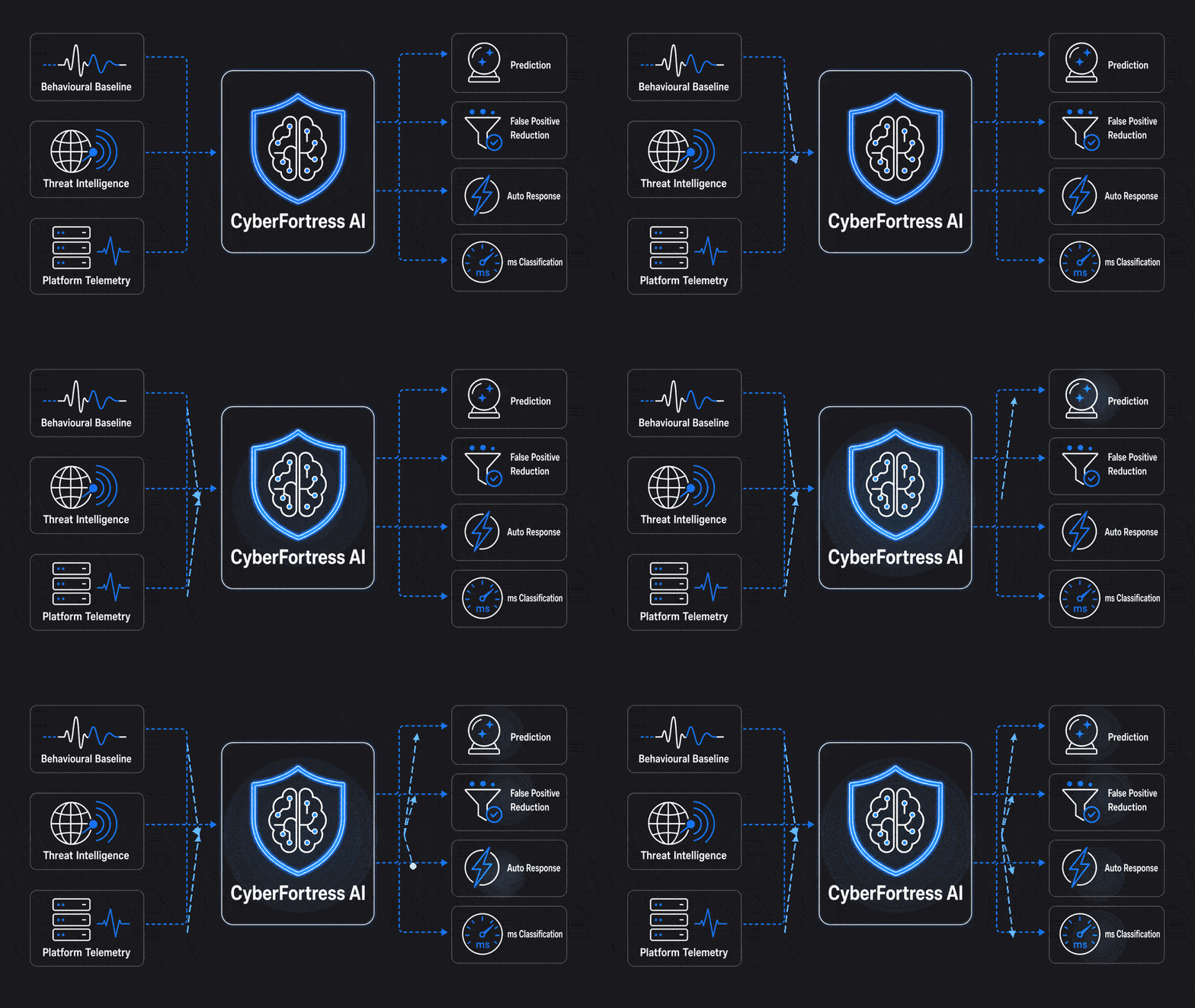
CyberFortress AI is not a feature bolted onto one product. It is the intelligence layer wrapping the entire platform, turning a set of modules into a security system that continuously learns, improves and acts on its own initiative.
It goes past signature matching into prediction: understanding what normal looks like in your organisation, then flagging the deviations that matter before an attack has fully formed.
95%
Reduction in false positives as the models adapt
90%
Improvement in mean time to detect
10x
Increase in security team throughput
ms
Threat classification in milliseconds, not minutes
How the intelligence layer works
Four mechanisms that operate across every module at once.
Behavioural analytics
User, device and application behaviour is analysed in depth. Deviations from the established baseline are flagged automatically, marking risky activity before an attack has actually taken place.
LLM and ML classification
Modern large language models and advanced machine learning algorithms classify and interpret threats within milliseconds – a decisive advantage against zero-day exploits and advanced persistent threats.
Adaptive learning
The system learns from every incident. That continuous loop makes the platform more precise and more effective over time, rather than slowly drifting out of date the way static rule sets do.
Intelligent orchestration
AI does not only detect. It connects findings across modules, interprets what they mean together, and triggers the response – which is what turns separate products into one platform.
Why signatures stopped being enough
A signature can only describe an attack someone has already seen, named and published. Every genuinely new campaign is, by definition, unsigned on the day it matters most.
Behavioural analysis changes the question from "have we seen this file before?" to "is this process doing something a legitimate process would never do?" – which a polymorphic sample cannot evade by rewriting itself.
The practical result is fewer false alarms and faster real ones. Analyst workload drops sharply, and the alerts that do arrive are worth opening.
Fewer false positives
Up to 95% fewer, as the models learn what is normal in your environment.
Faster detection
A 90% improvement in the time it takes to notice a real intrusion.
10x team efficiency
The same analysts cover far more ground when triage is handled for them.
Plain-language findings
Results and remediation steps explained in a way L1 and L2 analysts can act on directly.
One intelligence layer, every module
The same models read every signal the platform collects.
Put the models on your own traffic
Run a 30-day proof of concept and measure the false-positive rate against whatever you are using today.