Cloud Workloads Need
Cloud-Native Analysis
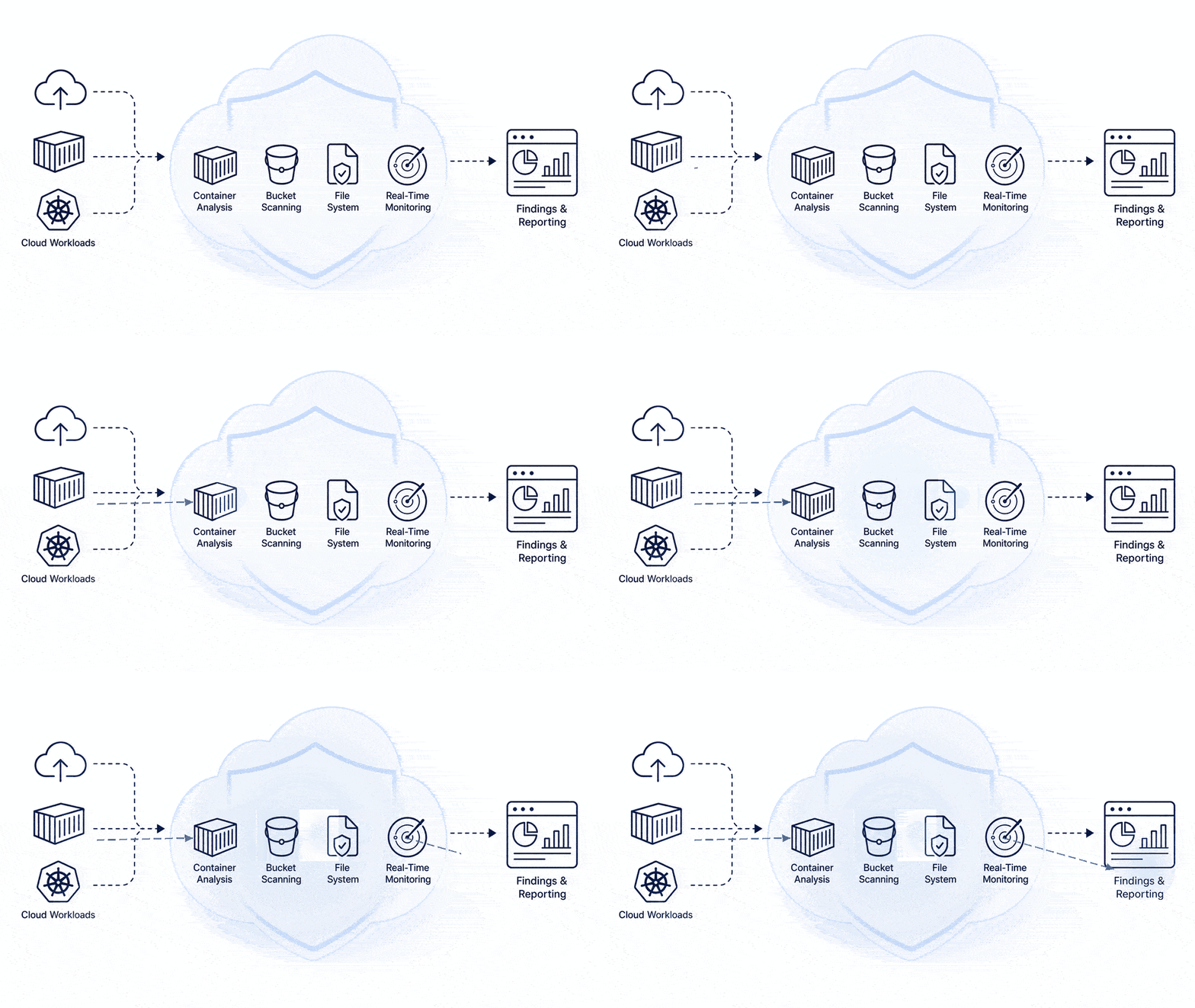
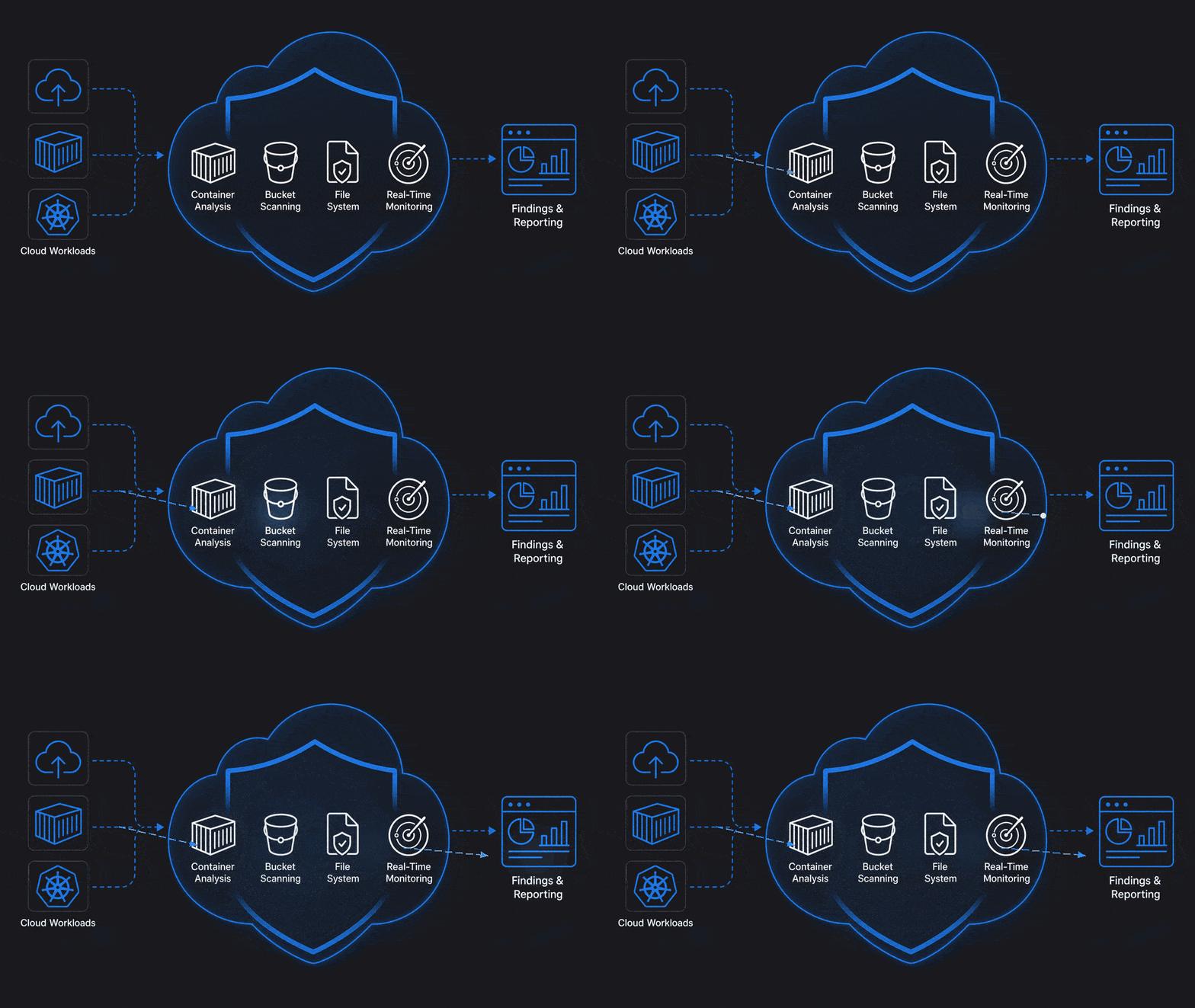
Generic security controls stop at the edge of the cloud. CyberFortress Cloud Hunter goes into it – inspecting the container images you ship, the buckets you store data in and the file systems your workloads share.
Hybrid or multi-cloud, the findings land in the same core as every other module, so a malicious file in a storage bucket and the endpoint that uploaded it are one incident, not two.
CVE
Container vulnerabilities scanned against live CVE data
Multi
Hybrid and multi-cloud coverage from one console
Real-time
Continuous monitoring of cloud resource activity
K8s
Docker and Kubernetes images, config and runtime behaviour
Four layers of cloud coverage
Each one addresses a part of the cloud attack surface that traditional tooling tends to leave uninspected.
Container Analysis
Images, configurations and runtime behaviour across Docker and Kubernetes are examined in depth. Injected malicious code, misconfigurations, vulnerable dependencies and supply-chain risks are detected automatically, with container vulnerabilities scanned on a CVE basis and critical findings reported the moment they surface.
Bucket Scanning
S3, Blob and comparable object stores are scanned continuously for wrong permissions, publicly exposed buckets, malicious content and suspicious file activity – blocking both data-leak paths and malicious uploads early.
File System Protection
File movements inside the cloud are analysed in real time. Malicious content, script-based attacks, suspicious executables and anomalous changes are caught immediately – critical defence for shared storage.
Real-Time Monitoring
Activity across cloud resources is tracked continuously, raising operational visibility while catching threats before they have an effect to measure.
The supply chain is the attack surface
A modern workload is assembled, not written. Base images, package registries, build pipelines and third-party layers all become part of what you run in production – and each is a place an attacker can reach you without ever touching your network.
Cloud Hunter inspects what actually ships. A vulnerable dependency, a secret baked into a layer, or a container that behaves differently at runtime than it did at build time are all findings the platform surfaces before they become an incident.
Where teams put it to work
Common deployments across hybrid and multi-cloud estates.
CI/CD image gating
Images are scanned before promotion, so a vulnerable or tampered layer fails the pipeline rather than reaching production.
Public exposure sweeps
Continuous checks catch a bucket that was made public by mistake – the single most common cause of cloud data leakage.
Shared storage hygiene
Files landing in shared cloud storage are checked for malicious content before another workload or user picks them up.
Runtime drift detection
A container behaving differently in production than it did in test is flagged as an anomaly, not dismissed as noise.
Scan your first cluster this week
Point Cloud Hunter at a single namespace or storage account and see what a CVE-based scan and a bucket sweep turn up.
Datasheet also available in Türkçe.