Every Decision
Rests on This Layer
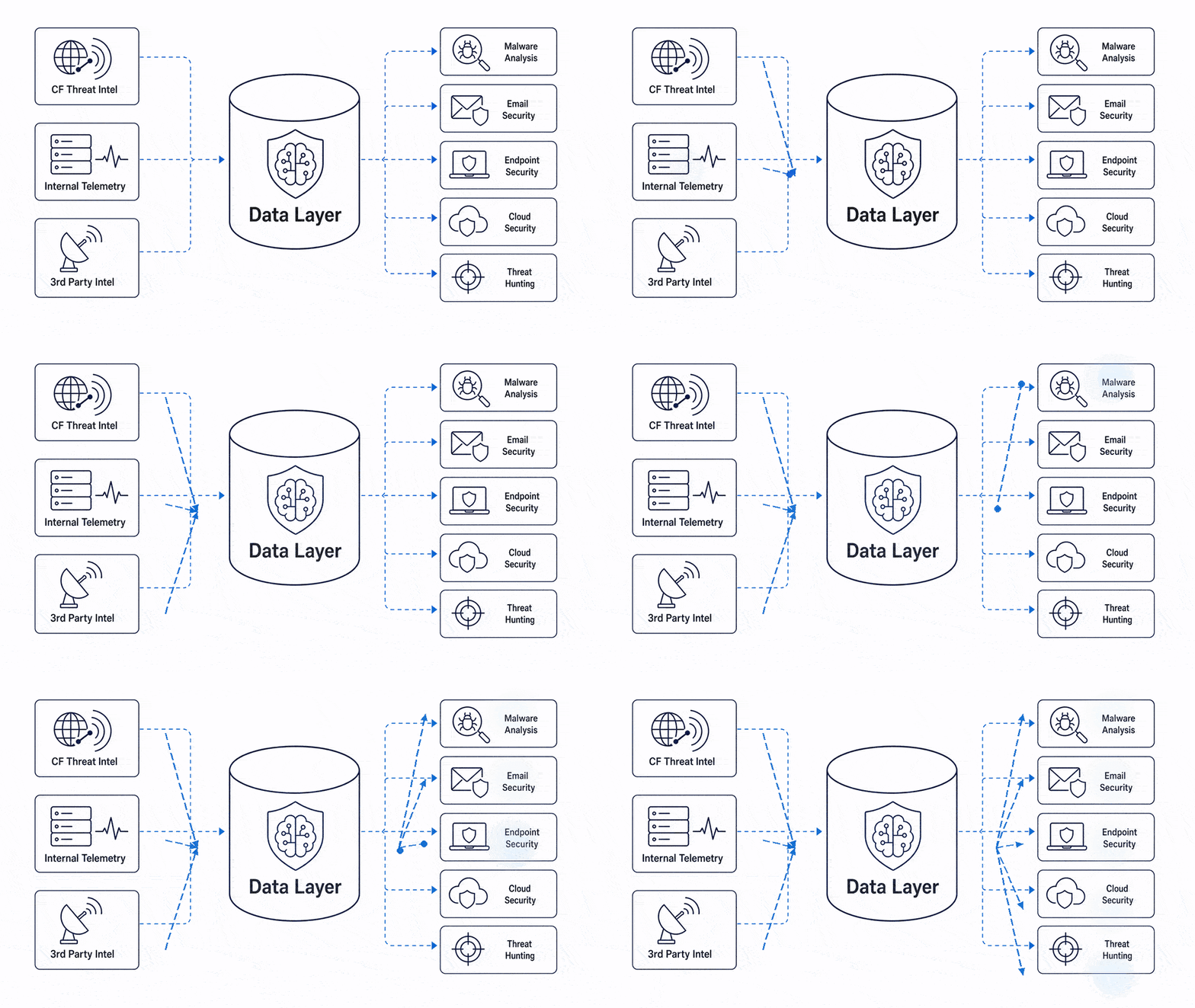
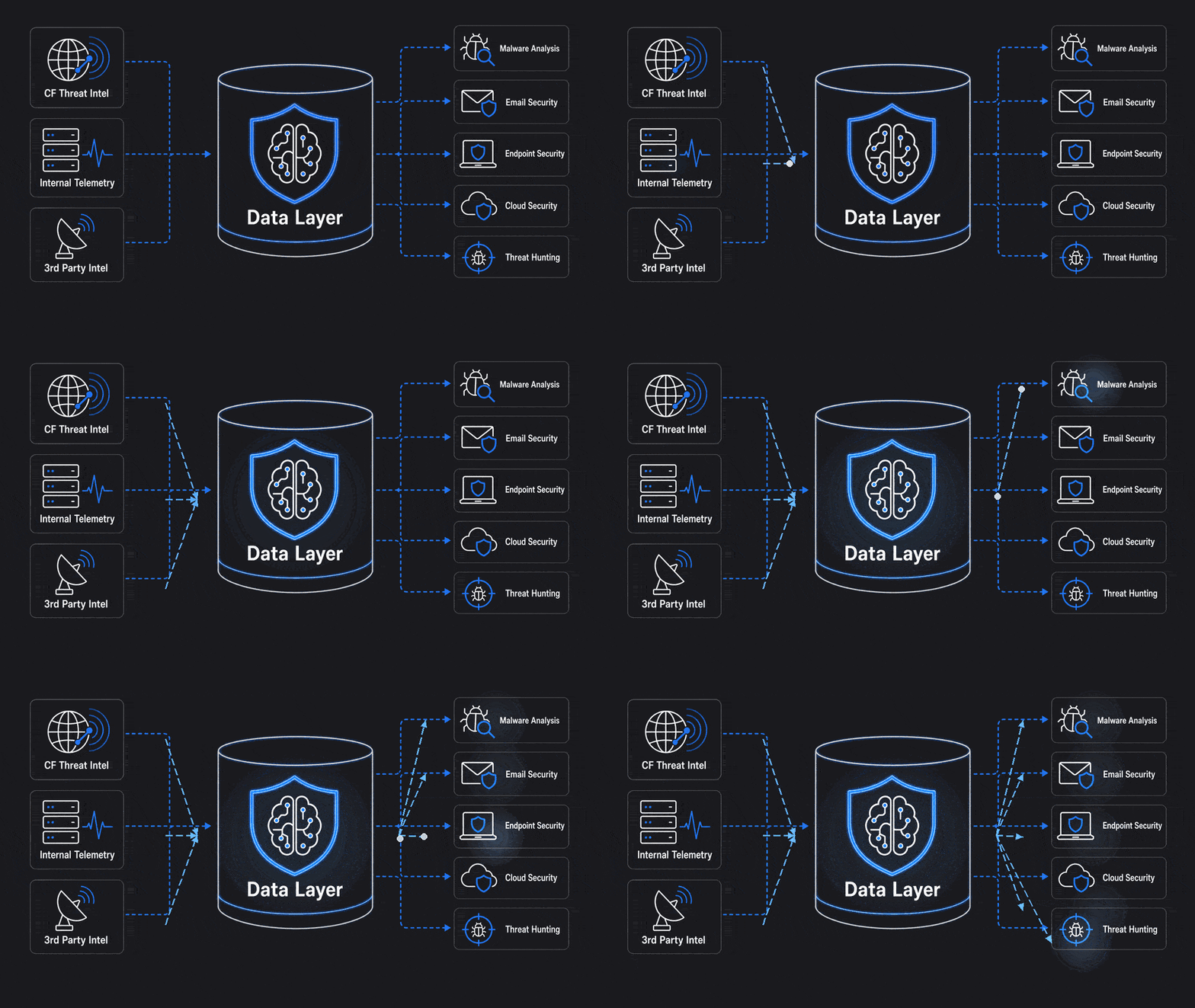
The Data Layer is not a storage bucket. It is a living ecosystem, fed continuously by CyberFortress Threat Intelligence, by internal telemetry from every platform component, and by third-party intelligence sources.
That multi-source design is what lets a global view of attacker activity and your own internal behaviour patterns sit under one roof – and it is why a verdict from any module arrives already carrying context.
TB/day
Terabytes of data processed by high-performance engines
95%
Increase in threat visibility through enrichment
90%
Reduction in false positive rate
10x
Faster analyst action on real incidents
What feeds the layer
Hundreds of distinct sources, normalised into one model and correlated in real time.
CyberFortress Threat Intelligence
Our own intelligence operation, informed by the malware we analyse at scale every day, giving the platform a current global picture of attacker infrastructure and tooling.
Internal platform telemetry
Logs, event records, sandbox verdicts, URL analysis results, endpoint telemetry, container behaviour and cloud activity – every module contributes what it sees.
Third-party intelligence
External commercial and community feeds are ingested alongside the rest, so you are never limited to a single vendor's view of the threat landscape.
Machine learning baselines
Models learn normal behaviour patterns from your own data and mark anomalies automatically, catching techniques that have never been published anywhere.
From raw event to context
Enrichment is what separates an alert you can action from a line in a log file.
Ingest
Terabytes a day arrive from hundreds of sources and are normalised into a single shared model.
Correlate
Real-time correlation links related events across modules, time and assets into a single storyline.
Enrich
Threat intelligence, historical context and behavioural baselines are attached, raising threat visibility by up to 95%.
Decide
Analysts act on contextual analysis rather than raw events – up to 10x faster, with 90% fewer false positives to wade through.
The backbone every module speaks through
Shared data is what makes this a platform rather than a bundle of products.
See what context does to your alert queue
Run a proof of concept and compare enriched incidents against the raw alerts your team triages today.